
With the ultimate goal of maintaining (and potentially improving) performance during the competitive season, we constantly face complex challenges. The competition schedule largely affects our decision-making regarding the training process. Microcycles of different durations, long travels, congested fixtures, and players’ availability challenge our planning & programming abilities and make us constantly use the ‘smart improvisation’ approach. With so many factors affecting the process, we are facing uncertainty every time we try to bring a safe but effective training plan. Although we are working in a team sports environment, we are constantly dealing with individualization, because different factors divide our team into different functioning units. To dig deeper, consider positional differences, veteran vs. rookie players, players on rehab, or those coming back to the team after a longer absence. I recently read that football is an individual sport, where individuals just play together, and I can understand the logic behind the scene.
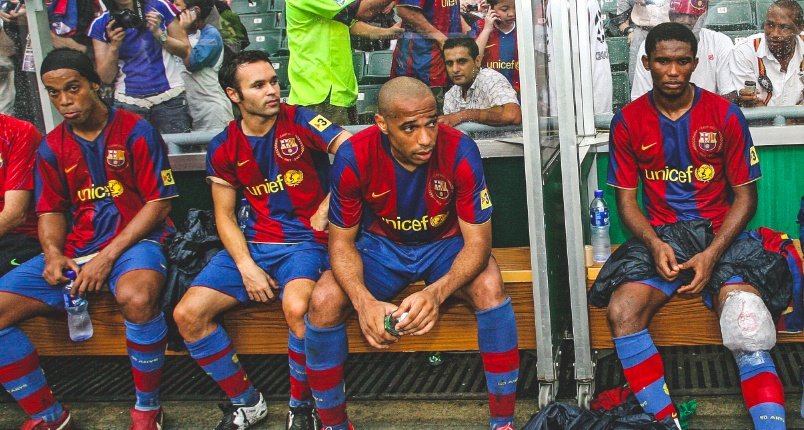
One of the biggest challenges from a health & performance point of view is dealing with players lacking playing minutes. Consider this: In a squad consisting of 25-30 players, we can easily say that >60% of our team are non-starters. When put like that, we understand the urge to resolve this puzzle and compensate for missed match stimuli. Easier said than done, most of the players who are rarely included in the squad will manifest a decrease in key physical abilities and performance in general throughout the season, no matter the compensation work done. For starters, the match represents the most stressful (and important) stimulus in our weekly planning, and lack of it will surely lead to maladaptations. Compensation activities rarely cover full match demands, furthermore, match represents the most specific stimuli where players need to act within their specific playing positions, execute specific technical & tactical tasks, and make very specific decisions under pressure. On the other side, lack of playing minutes affects the mental state of players and gives us additional headaches. Non-starters can express high levels of stress, lack of motivation, and frustration. With this in mind, we understand the importance of the challenge we are facing.
In order to keep this blog post short and concise, let’s discuss factors we need to consider when making a decision on compensatory work, what options we have, and what seems like the most viable solution.
Timing of compensatory work
Our two common options for compensatory work are match day (MD) or the next day (MD+1). To make the decision, we need to understand the context (number of days from the next match) and the pros and cons of both options. While makes sense to implement additional work immediately after the match, this leaves us with very limited time for execution. In this case, coaches are mostly focusing on compensating high-intensity work, making the very high density of intensive actions (e.g. HSR m/min), mostly without sport-specific elements (e.g. technical work), using very simple running protocols. Although we might argue that ‘something is better than nothing’, players involved in this type of work, together with a day off on MD+1 will be left highly undertrained. Conducting a full compensatory session on MD+1 thus seems like a more ‘elegant’ option, where players can experience a more adequate volume of different physical stimuli together with football-specific work. This brings us to the next question about tactical periodization and programming day off within the microcycle.

Programming Day off
Using tactical periodization gives us two options that continuously represent a ‘hot topic’ among practitioners. To put it simply: Should we rest on MD+1 or MD+2?
The answer to this question will highly depend on context, but it seems like a viable option to bring a team to the training center the day after the match. While starters are involved in recovery protocols and interaction with the medical team (e.g. health status screening), non-starters have an opportunity to complete a full session. Although, in some cases, this might be counter-productive. Consider playing a late-evening match and traveling back home during the night. To provide an adequate amount of sleep and thus promote recovery, bringing the team back to the academy the next morning doesn’t seem like a good option. In that case, we might consider scheduling afternoon sessions for non-starters and delivering high-quality sessions for this group. Furthermore, consider another example, a team plays a late-night away match on Saturday and travels home during the night. Sunday might be their only option to spend quality time with family. I can agree with that, but still, this leaves us some options. Since these situations may not be that frequent throughout the season, remote training seems like a fair deal from both the player and coaching staff’s point of view. Players might be supplied with a training plan that has to be done any time during the day. Since this is something we tended to do in the past, we still found a way to have some kind of control over the process. Simple HR monitors and easily shared reports help us to ‘stay in touch’ with work done. I personally experienced many times how grateful players can be when presented with this option instead of a late-night, post-match run. Of course, proximity to the next match plays an important factor when deciding on compensatory work. In case of 4 or fewer days to the next match, different options might be considered. It would be reasonable to compensate for high-intensity work immediately after the match, and still conduct additional sessions on MD+1 prioritizing technical & tactical work, leaving enough time for rest before the upcoming game. Finally, if the next match is in 3 or fewer days, we might decide not to do compensation work but deeply understand the context and individual training load needs. To summarize:
- MD+1 compensation work seems to be the most viable option, letting us plan & execute full football-specific sessions;
- Prioritize sleep after the night of travel, thus organizing afternoon session on MD+1 for non-starters might be another option;
- Trust the players and find a way to still collect the data in case of individual remote training (another viable option);
- In a lack of other options, program the compensation work immediately after the match, with a focus on getting the most out of the very limited time;
- Consider splitting compensatory work in MD and MD+1 when appropriate, targeting different qualities, thus allowing players to stay ‘in touch’ with football-specific work while promoting ‘freshness’ for the upcoming game.
Number of players
When considering compensatory sessions, the number of players might present a limiting factor, with a very small number of players not leaving us with many options for game-based drills. Planning these activities in advance might allow us to bring additional players from the Reserve and U19 teams, respecting their training & competition schedule. Although the biggest focus is on the Professional team, creating a precise schedule in advance and informing other coaches about your needs for a given session will help you develop clear communication and meaningful relationships. When dealing with this situation in the past, we tend to secure at least 8 players and 2 goalkeepers for compensatory work, with 10 to 12 + 3gks being the most optimal number. It is worth mentioning that sending one group of players to play for the Reserve team (younger players, huge lack of minutes, coming from injury) + giving a remote running program for a specific group of players (usually playing, but lack minutes in this particular game).
Training content
When planning an on-pitch compensation session, we start with a needs analysis. Simply, what are the most important components that have to be supplemented?
From personal experience, we tend to compensate for:
– 60-70% of match total distance
– 80-110% of match HSR distance (highly dependant on absolute benchmark values, where players with very high absolute values do not necessarily need to fully compensate for match values)
– 60-100% of match Sprint distance and No. of Sprints (highly dependant on absolute benchmark values, where players with very high absolute values do not necessarily need to fully compensate for match values)
– 80-110% of high-intensity accelerations and decelerations
Without digging deeper into the warm-up content, players are included in extensive protocol in order to properly prepare for high-intensity actions. Hip mobility and activation of main muscle groups are followed by low-intensity extensive plyometrics and SAQ elements, ending with straight-line progressions.
Option 1
After the warm-up, players take part in passing drills, usually respecting short-to-long progression. The first set (4-6′) will include shorter distances and fast execution of relevant technical drills. What we tend to do is to include decision-making as early as possible in the session, thus highly challenging players’ cognitive abilities. Therefore, almost every warm-up protocol will provoke players to show that they are ‘present’ for the session, instead of generically participating in pre-planned activities. The second passing set (4-6′) will focus on increasing distances, which leads to higher impacts and longer, progressive runs.
Up to this moment, we are sure that players are well prepared for the main part of the session and ready to cope with the demands of high-intensity actions. The following sequence includes position-specific work with groups of 3 to 4 players, where they simultaneously implement ball work and finally progress to a fast attack that ends with multiple finishing on the big goal. To give some examples:
– Central midfielder (CM) might start first, receiving the ball from the coach, turning and progressing to finish on the small goal, and progressing to play a wall pass with another coach (or assisting player) before progressing to score on another small goal (key pass).
– Winger  might attack the space in front, before dropping in the middle of the pitch to receive the ball and switch the side (small goal on the opposite side), further attacking the space and scoring on a big goal (1v1).
– Full-back (FB) might receive the ball from the coach (central defender), play the pass in the middle, and progress down the line to receive another ball in space and cross for CM and W.
I previously explored options for integrating HSR through different individual and group formats, and utilizing game-based or pre-planned running drills, with or without the ball. Please check that blog post HERE.
While seems complex, a little bit of trial and error might bring you where you want to be regarding timing, technical execution, and of course training load. There are numerous options to get the job done, and different play and movement patterns could be included. Although might seem chaotic, players are highly motivated to participate in this kind of drill. Introducing competition (e.g. between 2 groups of 4 players) will highly motivate players and enhance training intensity. Although it looks hard to control the chaos, there are options to handle the load and achieve the desired outcome.
This particular drill is approx. 10 to 12 seconds in duration, after which players have passive rest for 30-45 seconds. The 10/20″ model perfectly matches the HIIT format suggested by Laursen & Buchheit (Chapter 4 in NSCA’s Essentials of Sport Science), where players are reaching individualized HSR objectives while executing position-specific tasks. Live tracking is an important tool when dealing with such a chaotic drill. We tend to secure pre-planned, individual volumes of HSR, thus tracking allows us to fine-tune the number of repetitions. From my experience, 3 sets of 6 to 7 reps, with 3′ passive inter-set rest allow us to achieve our objectives.
Live tracking allows us to supplement the drill, which is usually immediately upon completion of the final set, to be sure that we reach the desired intensities. If necessary, individual or group of players will include additional straight-line sprints to achieve sprinting objectives (7-9 sprints in total >25.2 km/h, with at least 2 sprints >90%Vmax, and at least 1 >95%Vmax). It is important to note that these objectives will highly depend on context, thus additional sprints might be completely excluded when appropriate.
Finally, the session would end with 4v4 SSG usually using 5×3′ or 4×4′ protocols, with 2-3′ of passive rest between sets. SSG would present a high mechanical load, with a high density of accelerations, decelerations, and COD. Thus, we tend to make sure that we hit different targets with different drills (complementary work). Previously explained position-specific drill helps us reach higher speeds, focusing on the pre-planned volume of high-intensity runs that is supplemented with additional sprints if necessary, while SSG is part of our aerobic conditioning work and our way to secure high mechanical load.
Option 2
While the warm-up protocol and passing sequence stay the same in both options, the main part of the session might differ, based on needs and daily context. When looking for a less complex solution, a combination of SSG and Short intervals (SI) can help us achieve training goals. Since SSG secures a high amount of mechanical load, we might complement it with straight-line HIIT (or combination with curvilinear runs or one 180-degree turn) to secure the needed amount of high-intensity running. To make sure that we satisfy individual needs, FBs and Ws might be introduced with more straight-line repetitions, while CM might do more curvilinear runs and a higher number of CODs. The CD would mainly complete shuttle runs with 2 turns, but please note that many options are included but in different ratios. My typical protocol in this particular session implies 10/20′ and 15/15″ work and passive rest duration.
Thus, the main part of the session might look like this:
– SSG 4v4 33x30m (Area per player = 124m), 5×3′ w/ 2′ passive rest
– Positional Short Intervals 2×5′, 10/20″ work/passive rest, 2-3′ inter-set rest
FB & W = 12x straight-line, 8x shuttle
CM = 8x straight-line, 6x curvelinar, 6x shuttle
CD = 12x shuttle, 4x straight-line, 4x curvelinear
ST = 6x straight-line, 8x curvelinear, 6x shuttle
Please note that this protocol was created using a ‘try & error’ approach, and fits well in our context, with our positional and individual needs. Different contexts would need different approaches to better suit needs and desired outcomes.
Window of Opportunity
Although out of the scope of this blog, it is important to note that the lack of playing minutes provides a great opportunity for development. Additional gym work pre/post compensation sessions are a great opportunity to increase the volume of strength sessions and work additionally on individual weaknesses. Low-volume compound lifts before the pitch session, along with individual upper body and core work post-session will add great value to the total weekly load.
Finally, I suggest investing time and creating your own, very unique compensation sessions, using drills that fit your needs. Playing around with volume and intensity, while tracking it live and post-session will help you fine-tune your protocols, that suit your team’s needs and your objectives. Be consistent with compensatory work, to avoid spikes in load later down the road, but at the same time understand the context and mental state of your non-starters. However you organize the session, compensating HSR and Sprint work, along with aerobic capacity via small-sided games (SSG) and short intervals (SI) with and/or without the ball should stay your main focus. When possible, do your best to make the session sport-specific, it will increase players’ buy-in and ‘hit many birds with a single rock’.
